Modernism and architecture
Barcelona is recognizable in its facades, its impossible shapes, and the details that appear when you look up. Modernism transformed the city in the late 19th and early 20th centuries, leaving a legacy where architecture, craftsmanship, colour, and nature come together in surprising ways.
During your stay at Barcelona Century Hotel you can explore some of its most emblematic buildings and discover that architecture is not only concentrated in the great monuments: it is also present in balconies, doorways, lampposts, pavements and corners that turn any walk into a visual experience.
Passeig de Gràcia, an open-air museum
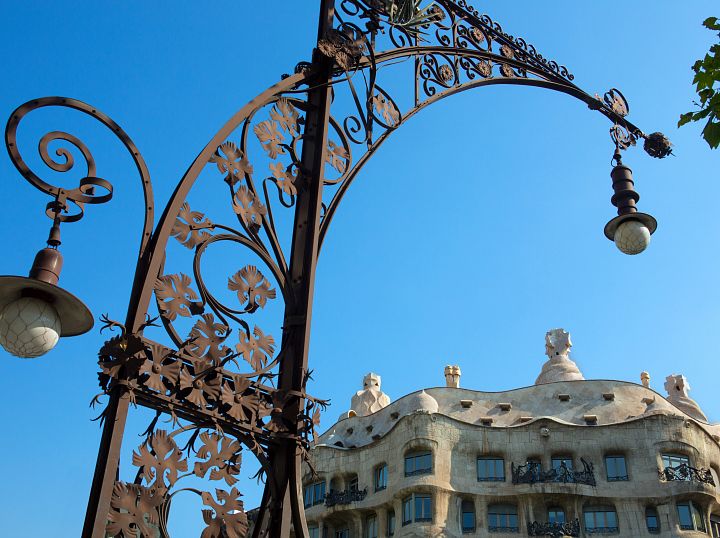
Passeig de Gràcia is one of Barcelona's great architectural showcases. Its wide sidewalks are lined with modernist buildings, shops, and distinctive urban features such as Pere Falqués's lamppost-benches and paving inspired by a Gaudí design.
Explore it, paying attention to each facade, and discover how creativity is woven into the city's daily life. From the ornamental details to the undulating forms of its buildings, every stretch offers a new reason to stop and look up.
The Apple of Discord, three styles face to face
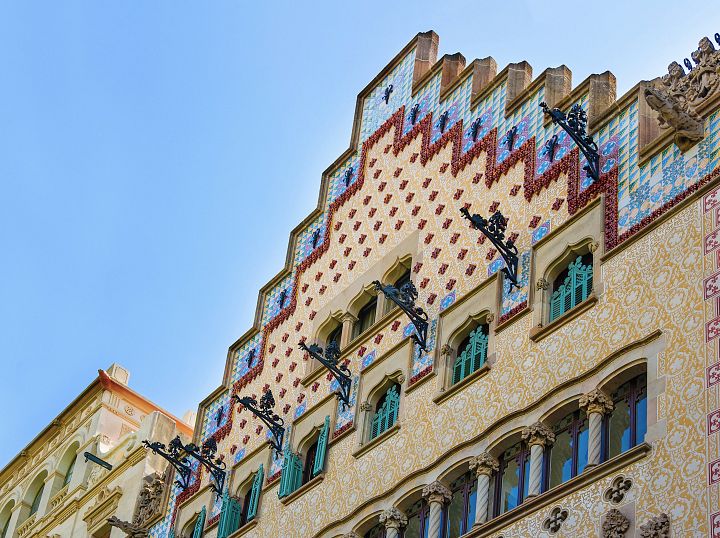
In the same section of Passeig de Gràcia, Casa Batlló by Antoni Gaudí, Casa Amatller by Josep Puig i Cadafalch and Casa Lleó Morera by Lluís Domènech i Montaner coexist. The marked difference between their styles gave rise to the name Apple of Discord.
Looking at the three facades reveals different ways of understanding Modernism. Ceramics, stained glass, sculptures, and medieval references combine in a whole that reflects the imagination of its architects and the splendor of Barcelona at the time.
The Sagrada Família, Gaudí's great symbol
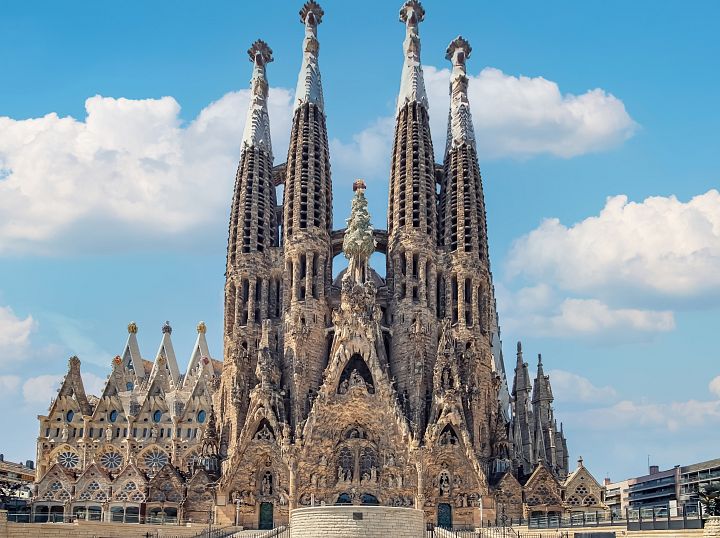
The Sagrada Família is Antoni Gaudí's most renowned work and one of Barcelona's great architectural icons. The architect took on the project in 1883 and dedicated more than four decades to developing a temple inspired by nature, geometry, and religious symbolism.
Its facades tell different stories, and the interior transforms columns, light, and colour into a space reminiscent of a vast stone forest. Visiting it allows you to delve into Gaudí's creative universe and understand why his work continues to amaze visitors from all over the world.
Sant Pau Modernist Complex, a city within a city
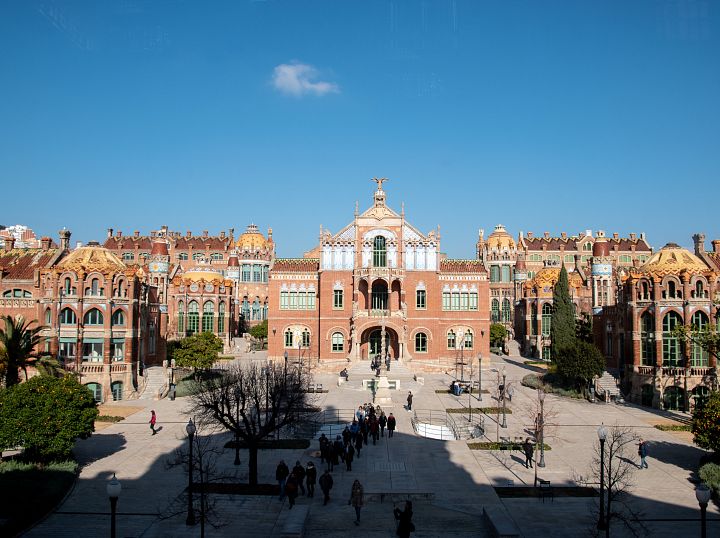
The Sant Pau Modernist Complex is Lluís Domènech i Montaner's most important work and is considered the largest Modernist complex in the world. Its twelve pavilions, surrounded by gardens and connected by underground galleries, were designed to create a more humane and luminous environment for patients.
Ceramics, mosaics, sculptures and stained-glass fill with colour a space declared a World Heritage Site by UNESCO in 1997. Its proximity to the Sagrada Família allows visitors to combine both monuments in a tour of two very different ways of understanding Modernism.
Palau de la Música Catalana, architecture that comes to life
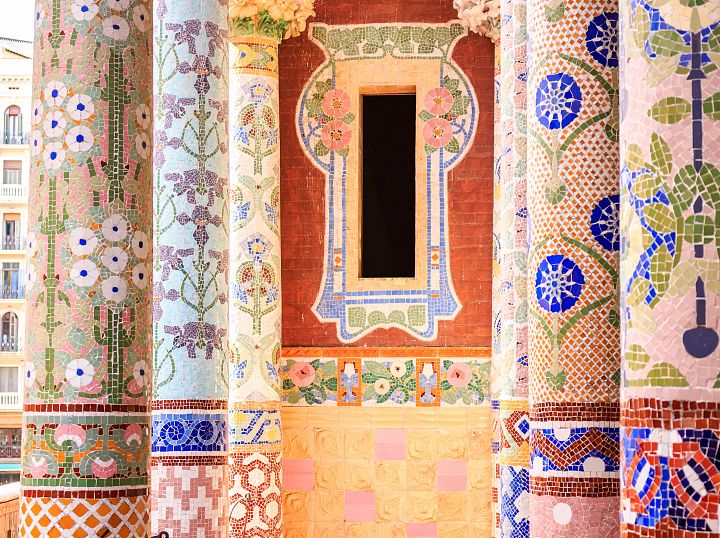
Designed by Lluís Domènech i Montaner and built between 1905 and 1908, the Palau de la Música Catalana brings together sculpture, mosaic, stained-glass and wrought iron in a concert hall conceived as a great work of art.
Its spectacular central skylight floods the auditorium with light, while plants and decorative figures envelop the stage. You can discover it during a visit or attend a concert and experience how architecture and music coexist in a space that remains vibrant and alive.
Park Güell, where architecture merges with nature
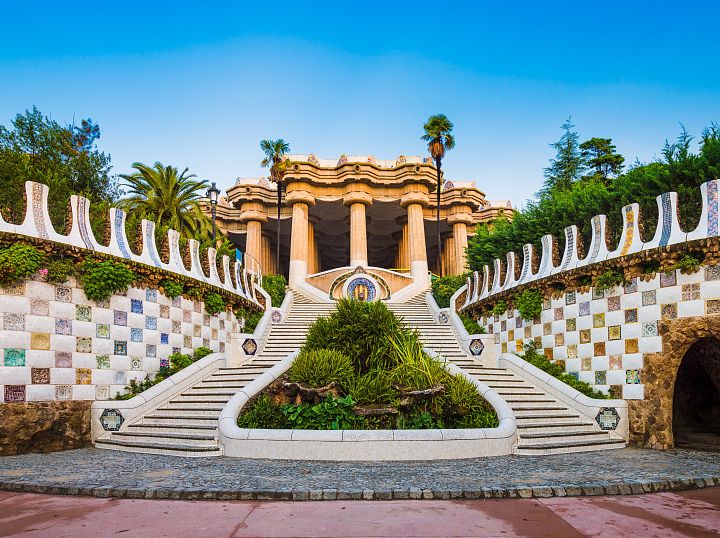
In Park Güell, Gaudí transformed pathways, columns, plazas, and viaducts into integral parts of the landscape. The project began in 1900 as a residential development, though it eventually became one of Barcelona's most unique public spaces.
Its undulating forms, trencadís mosaics, and structures inspired by natural elements create a journey full of colour and unexpected perspectives. From its large terrace, you can also contemplate Barcelona and the Mediterranean, seamlessly integrated into the park experience itself.
Barcelona, always waiting to be discovered
Barcelona is a city of contrasts, open to the Mediterranean and full of iconic neighborhoods, architecture, culture, gastronomy, and urban life. Every stroll reveals a new perspective... Discover them all!

Barcelona by the sea

The Eixample district and neighborhoods with character

Gastronomy and markets

Shopping and urban life